National Treasure

Cinerary Urn
瑠璃骨壺
Archaeological Objects · Asuka, 707TNM
Home › Browse › Archaeological Objects › Nara period › Epitaphs of Oharida no Yasumaro
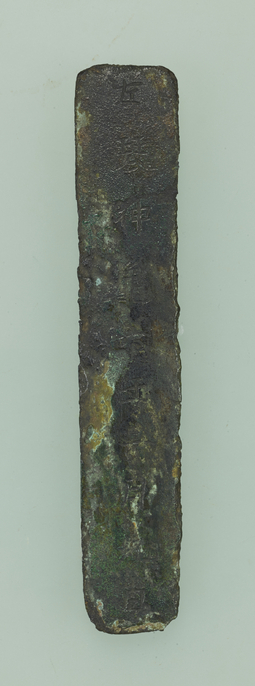
Epitaphs were written on plates or cinerary urns to inform future generations about the occupants of graves. Unlike modern-day tombstones, these items were interred inside the graves. This was originally a Chinese custom, but it was also practiced in Japan from the end of the 7th century to the 8th century. Only 16 such epitaphs have been found in Japan, mainly in the west of the country. This particularly rare example is comprised of one main plate and two sub plates. The main plate is resplendently coated with gold. The inscription on the larger main plate begins with the characters ‘Ukyo Sanjo Nibo.' This may refer to the place where the deceased person lived. It corresponds to an area south of Yamato-Saidaiji Station in modern-day Nara City. The inscription then lists the deceased's rank and his name. We do not know much about Oharida no Yasumaro, apart from the fact he belonged to a branch of the Soga clan. The main and sub plates also contain a date – the ninth day of the second month, Jinki 6, or the year 729. This is thought to be the day Oharida no Yasumaro passed away.
The right sub plate also features the Chinese character for 'calligraphy' and the left sub plate the character symbolizing a traditional Chinese musical instrument. At that time, these two characters symbolized the ideals of learning and cultivation in China. These may be allusions to the good character of the deceased. The words and ideas inscribed on epitaphs point to China's huge influence on Japan. This epitaph was excavated with a wooden coffin believed to have contained the cremated bones of the deceased. It was also found alongside some Wado-kaichin silver coins, fragments of Sue stoneware and a jar with three-color glaze, and some unglazed earthenware jars, for example. These have collectively been designated an Important Cultural Property. They reveal a lot about the deceased person and the reverence with which the dead were buried back then. These epitaphs were excavated along with a wooden coffin containing cremated remains, accompanied by various grave artifacts. It is rare to have three epitaphs dedicated to a single individual.
— Museum description: Tokyo National Museum (CC BY 4.0), via ColBase / Japan Search.