National Treasure
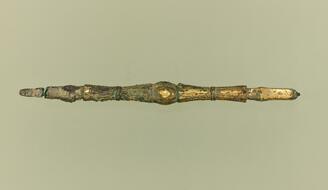
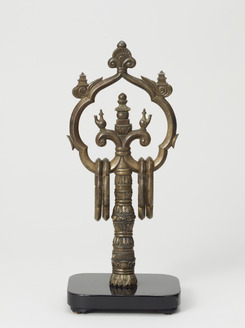
Shiketsu (Posts Erested at Four Corners of Alter to Rope off Sanctuary), Gilt bronze
独鈷
Metalwork · Heian, 12th centuryTNM
Home › Browse › Metalwork › Kamakura period › Buddhist Reliquary with a Flaming Jewel

In Buddhism, the word “sarira” refers to human bones or remains, particularly those of Sakyamuni, the founder of Buddhism. The veneration of sarira as the holy remains of Sakyamuni began in India. The custom later spread to Japan and this led to the widespread practice of filling containers with small pieces of crystal, agate, and other precious stones, then worshipping them as sarira. This sarira reliquary is a combination of several parts forged from bronze and plated with gold. The top section depicts a wish-granting jewel engulfed in flames. This serves as the actual container. It has a lid on top that reveals a hollow body when removed. Flaming-jewel reliquaries were actually the most common type of sarira container during the Kamakura period, from the 13th century onwards.
However, the section beneath the jewel adopts a very unique design. It features a square podium topped by a five-pronged vajra, a Buddhist ritual implement used in Esoteric Buddhism. This design suggests the reliquary was enshrined during an esoteric sarira-worship ceremony. This object contains stone or glass beads that represent the Buddha’s cremated remains. Monks of the Esoteric schools of Buddhism likely used it during prayers. Its design is comprised of multiple lotus pedestals befitting this sacred object and various Buddhist symbols, such as a ritual weapon in the middle.
— Museum description: Tokyo National Museum (CC BY 4.0), via ColBase / Japan Search.