National Treasure

Embroidery of the Buddha Shaka (Skt. Śākyamuni) Preaching
刺繍釈迦如来説法図
Crafts · Asuka, 601–800Nara NM
Home › Browse › Crafts › Asuka period › Bell
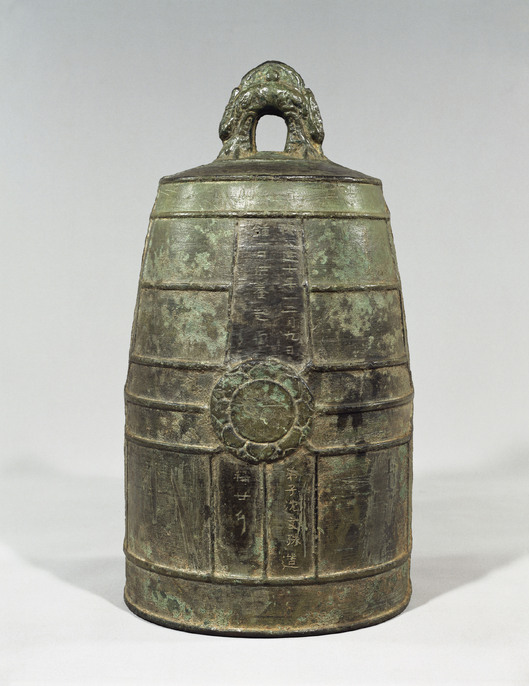
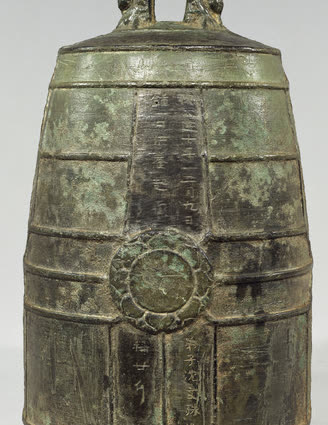
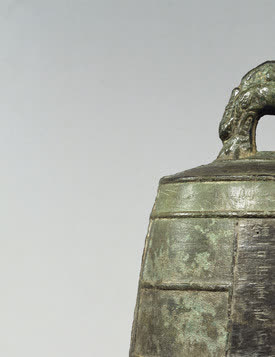
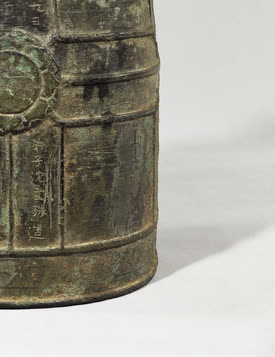
{br=>[[]], content=>[This temple bell is in a relatively small scale. Between its vertical bands is an engraved inscription that reveals the date of its production in 575 (Taijian 7) in the Jin kingdom during the Six Dynasties period (220–589). The top portion of the bell is, formed in the shape of a dragon, and the bell body has a design of band-like compartments. This important early example of a temple bell can be regarded as a predecessor to the Japanese temple bells that would adapt several of its elements.]} Temple bells are rung during Buddhist ceremonies and to mark the time of day. This bell’s inscription tells us that it was produced in the Chen dynasty (557–589 C.E.), one of the kingdoms of the Northern and Southern dynasties in China. Japanese temple bells were modeled after ancient Chinese bells like this one, making its close study all the more rewarding for those familiar with examples in this country. {br=>[[], []], content=>[This rather small bell has been drawing people's attention because it is presumably the prototype of Japanese-type temple bells.
This bell is not decorated with chi ornamental dots, which are usually found on the upper part of a bell. The reason for this may be its small size. The location of tsukiza (the place to be hit) is near the center of the bell, which is unusually high. The directions of the ryūzu (the bell-cannon) and tsukiza indicate that this bell was made in the classic style., On one of the ornamental vertical belt on the surface of the bell is an inscription of the production date, which was December 9, 575. Judging from its color and some damaged parts, it is possible that this bell had once been buried underground. As the finishing work after casting was not done thoroughly, the part where the molds were joined is observable., Although small in size, the style of this bell is imposing and powerful. This bell, which bears an inscription of its production date, is a significant object of the period of the six dynasties.]}
— Museum description: Nara National Museum (CC BY 4.0), via ColBase / Japan Search.


