National Treasure
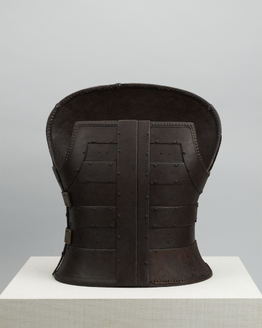
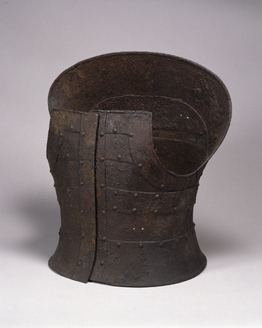
Armor ("Tankō") with Horizontal Plates Joined with Leather
横矧板革綴短甲
Archaeological Objects · Kofun, 401–600TNM
Home › Browse › Archaeological Objects › Kofun period › Tomb Sculpture (Haniwa): House with Smaller Houses

Haniwa are terracotta clay ornaments that were placed on or around burial mounds known as kofun. They come in many shapes and sizes, from early, cylindrical ones to those shaped like armor, shields, boats and houses, for example, or humans and animals. They were usually lined up around the tombs or on dais-like areas on the tombs. House-shaped haniwa appeared very early on and many of them have been found from the summits of the mounds. From this, it is surmised they had some special significance not shared by other types of haniwa. During the mid-Kofun period, when these objects were made, funeral rites were carried out on top of the tombs. This was a way for the person performing the ceremony to promote regional integration and show he was now ruler of the area. House-shaped haniwa probably served as symbols of the leader's power.
This haniwa has a very complex structure. In the center sits the main house with a hip-and-gable roof. Two smaller houses with hip-and-gable roofs are attached to the front and back, while two small houses with gabled roofs are annexed on the left and right. Perhaps this is an extremely ingenious attempt to portray, in a single house-shaped haniwa, the view of a powerful lord's residence, with a number of smaller structures arranged around a central building. This valuable work offers us significant clues to what buildings and settlements looked like during the Kofun period. House-shaped [haniwa] sculptures played a central role among representational [haniwa]. This structure, which consists of four houses around the main pit dwelling, had special functions.
— Museum description: Tokyo National Museum (CC BY 4.0), via ColBase / Japan Search.