National Treasure

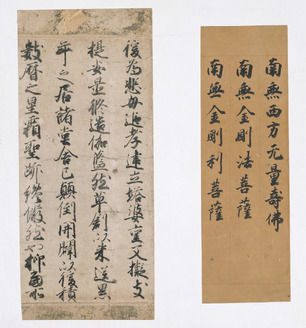
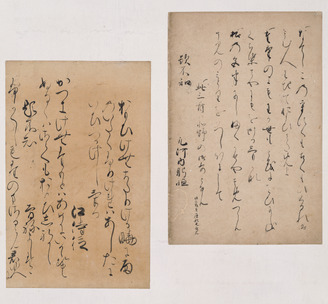
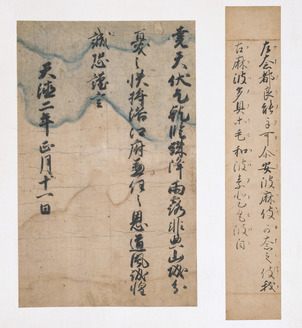
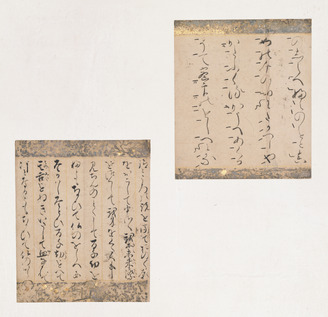
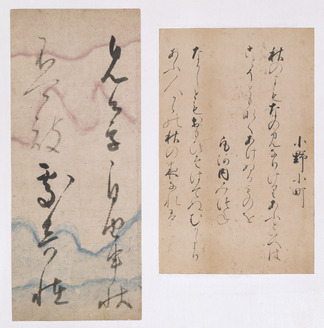
Commentary on Vajracchedikā-sūtra, by priest Kūkai
空海筆 金剛般若経開題残巻(三十八行)
Calligraphy & Books · Heian, 9th centuryNara NM
Home › Browse › Calligraphy & Books › Nanbokuchō period › The Twenty-five Articles of Priest Kūkai's Last Will

{i=>[cintāmaṇi, hōju], content=>[On behalf of his disciples and to ensure the lasting legacy of his transmissions, Kūkai (774–835) is said to have offered these articles as a “final testament” prior to his passing. They include explanations of the origins of the Shingon sect, important aspects of Shingon doctrine, how temples ought to be administered, and of the existence of the esoteric treasures of wish-fulfilling jewels (Skt. , ; J. , ). The original document is thought to have been compiled around the tenth century by a Shingon priest.]} {br=>[[], []], content=>[This is the last will, which Priest Kūkai (or Kōbō-daishi, 774-835) handed to his disciples on March 15, 835, six days before his death., In the written will Priest Kūkai announced that his death was approaching and gave detailed directions about the administration and management of the temples of his sect.
Since then, generations of priests in the Shingon sect of Buddhism have been keeping Kūkai's last will as their precept., The scroll introduced in this article is a copy made on April 21, 1339 by Priest Kenshun (1299-1357), of Daigo-ji temple. Kenshun gained power as Shogun Ashikaga Takauji's priest. The calligraphic style of this copy is slightly different from Kenshun's other handwritings, because he may have paid respect to the original manuscript. The densely written kana-type characters, the Japanese pronunciation added to Chinese characters and other punctuation marks indicate that Kenshun tried to make this copy an authorized version of Kūkai's last will.]}
— Museum description: Nara National Museum (CC BY 4.0), via ColBase / Japan Search.