National Treasure

"Lotus Sutra" in Small Characters
細字法華経(御同朋法華経)/附 経筒1
Art Objects · Asuka, 694TNM
Home › Browse › Art Objects › Asuka period › The Lotus Sutra in Small Characters

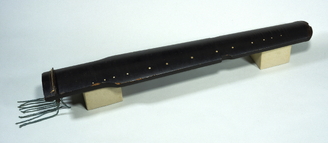
One legend about the Asuka-period scholar and politician, Prince Shōtoku, states that in a previous life, he was the Chinese monk Nanyue Huisi. Purportedly, the Lotus Sutra was originally introduced to Japan when Ono no Imoko, an emissary who travelled to China in 607, brought back a transcription of this sutra that had been written by someone who studied alongside Huisi. This work is a transcription of all seven volumes of the Lotus Sutra onto a single scroll, which is why each column is filled with thirty-two minute characters. The scroll is made from thirty-nine pieces of hemp paper that were connected together and is approximately nineteen metres long.
An inscription at the end of the scroll states that it was transcribed by a monk named Li Yuanhui in Chang’an in the year 694. This inscription contributes to the immense value of this work as it reveals both the transcriber and the creation date. The scroll was originally stored in a wooden box that was made by splitting a piece of incense wood lengthwise and hollowing it out to make room for the scroll. Empress Kōmyō, who worshipped Prince Shōtoku, offered this scroll to Hōryūji in 737.
— Museum description: Tokyo National Museum (CC BY 4.0), via ColBase / Japan Search.