National Treasure

Ritual Objects Used to Consecrate the Site of Kōfukuji Temple, Bowl
興福寺鎮壇具 金銅鋺
Metalwork · Nara, 8th centuryTNM
Home › Browse › Metalwork › Nara period › Ritual Objects Used to Consecrate the Site of Kōfukuji Temple, Eight-Lobed Mirror with Auspicious Flowers and Paired Phoenixes
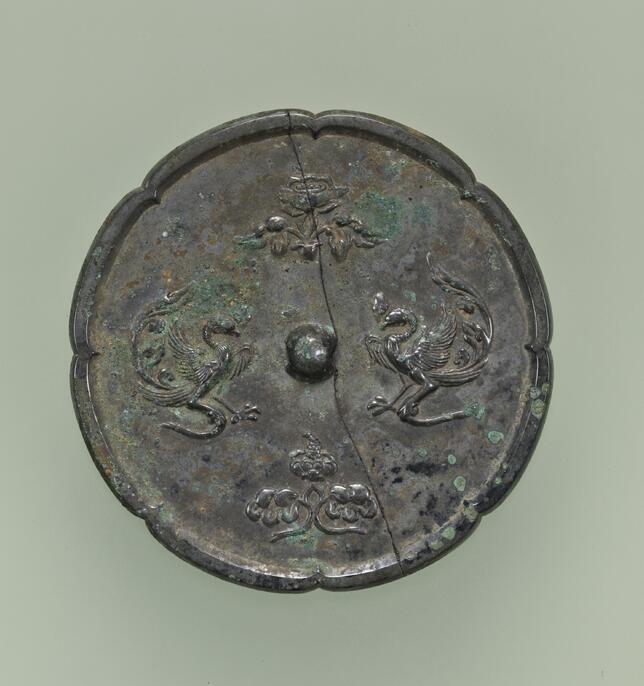
Chindangu were votive objects buried beneath the altar or foundation stone when a temple was being built. They were dedicated to the gods of the land to appease them and seek their eternal protection for the temple's halls and pagodas. This display features votive objects excavated from below the foundation of the altar of the Golden Hall at Nara's Kohfukuji Temple in 1874. The item on display today is one of a set of two mirrors. This is the rear side, not the undecorated front side that was used as a mirror. The mirror is a copper-tin alloy capable of giving off reflections when burnished thoroughly.
It contains a lot of tin and it is thus characterized as much by its fragility as its reflective abilities. It was found in two pieces, though we don't know if this breakage was a natural occurrence or whether the mirror was broken for some reason during the consecration ceremony. The round protuberance in the center is a hole for threading cord. The hole is surrounded by pairs of phoenixes and auspicious flowers. This kind of design was popular in Tang-dynasty China, during the 8th century. Mirrors like this were either imported from China or were produced in Japan based on a Chinese original.
— Museum description: Tokyo National Museum (CC BY 4.0), via ColBase / Japan Search.


