National Treasure
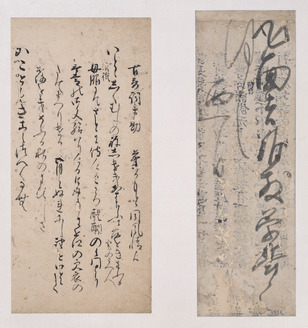
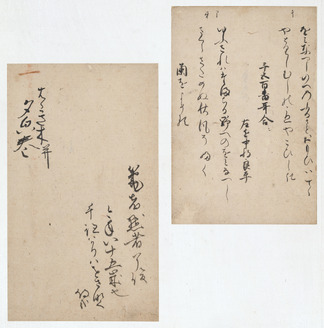
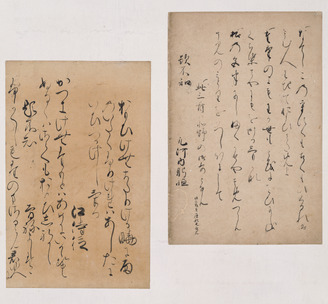
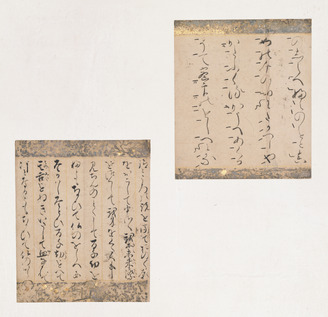
Fragment of the Hosokawa Edition of Kakaisho, Volume 1, from the Moshiogusa Album of Exemplary Calli
手鑑「藻塩草」 河海抄巻第一断簡(細川切)
Calligraphy & Books · Muromachi, 1336Kyoto NM
Home › Browse › Calligraphy & Books › Nanbokuchō period › Prayers Offered by Emperor Fushimi
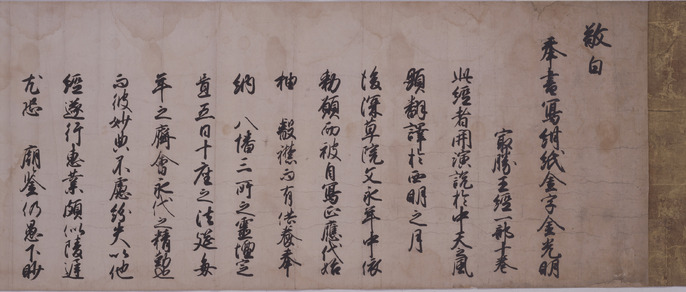
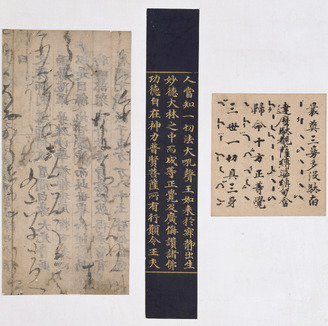
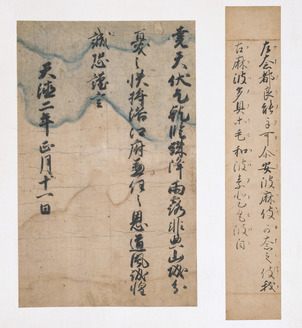
Emperor Fushimi (1265-1317, r. 1287-98), the son of Emperor Gofukakusa (1243-1304, r. 1246-59), ascended the throne after Emperor Gouda (1267-1324, r. 1274-87) of the Daikaku-ji line. He was accomplished in waka (Japanese poem) composition and known for his mastery of calligraphy. In particular, he was skilled in jôdai ryû (archaic style) calligraphy, and his style, which became known as Fushimi-in ryû in later years, had a great influence on later generations. These prayers with ten volumes from The Most Victorious Kings Sutra in Gold Lettering on Dark Blue Paper (J., Konshi kinji saishôôkyô) were offered to Iwashimizu Hachiman Shrine by Emperor Fushimi when he and his son, Emperor Gofushimi (1288-1336, r. 1298-1301), confined themselves within the shrine in 1313 (Shôwa 2). The calligraphy is masterful with flowing and elegant lines.
— Museum description: Kyoto National Museum (CC BY 4.0), via ColBase / Japan Search.