National Treasure

Comb Box with Pine and Camellia in Makie and Combs in Makie (Sacred Treasures from Asuka Shrine)
阿須賀古神宝類 松椿蒔絵櫛箱・蒔絵櫛
Textiles · Nanbokuchō, 14th centuryKyoto NM
Home › Browse › Textiles › Nanbokuchō period › Mirror with Floral Arabesques and Pair of Cranes (Sacred Treasure from Asuka Shrine)

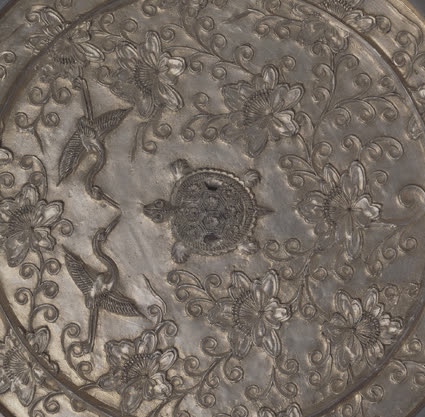
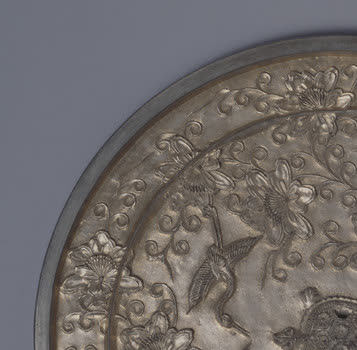
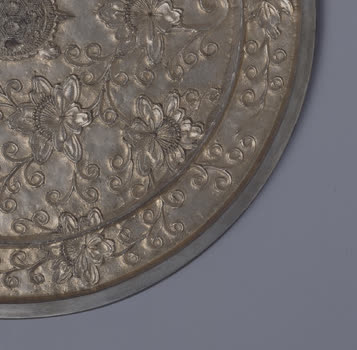
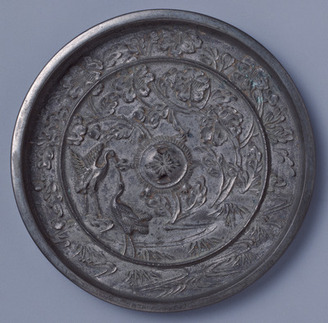
A number of ancient sacred treasures were dedicated to the Twelve Shrines of Kumano and the allied Asuka Shrine by the sovereign, the retired sovereign, the shogun (Ashikaga Yoshimitsu; 1358-1408) and some feudal lords in 1390 (Meitoku 1). Among those, three large hakudô (copper and tin alloy) mirrors (IK68-24, IK68-25, and IK68-26) are said to belong to the ancient sacred treasures of the Asuka Shrine. There are also 12 mirrors of similar manufacture and size among the Ancient Sacred Treasures of Kumano Hayatama Shrine (National Treasures; collection of the Kumano Hayatama Shrine), which were offered to the Twelve Shrines, for a total of 15 mirrors that have been preserved to the present. Because the combination of motifs adorning the mirrors does not match the designs of the makie toiletry boxes and mirrors contained therein, and also since the number of items differs from annotations in the Catalogue of Kumano Shrine Sacred Treasures (J., Kumano shingu goshinpô mokuroku), there is little historical evidence to support the identification of this mirror and the other two as those included among the objects dedicated to the Asuka Shrine, however.
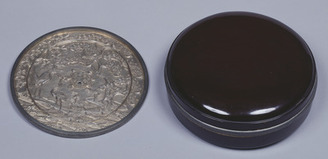
These problems notwithstanding, there is almost no doubt that the 15 large mirrors and fine hakudô mirrors contained in the toiletry boxes were produced for an offering made in 1390, since they were made of the same quality copper in a similar mirror body style and because they were carved with the same technique. Not only are they refined mirrors (J., seiryô kagami), but they are also very valuable objects in that they can tell us much about the manufacturing details of the period. Each mirror is accompanied by a black lacquered mirror box, which includes designs of paulownia, fortune clouds, and birds in shaku hyômon (sheet-metal decoration) on the back of the lid.
— Museum description: Kyoto National Museum (CC BY 4.0), via ColBase / Japan Search.