National Treasure
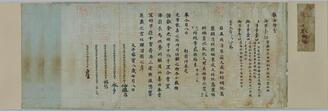
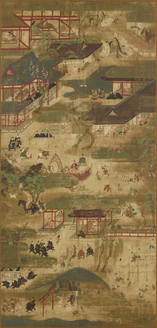
Illustrated Biography of Prince Shōtoku
聖徳太子絵伝
Art Objects · Heian, 1069TNM
Home › Browse › Art Objects › Nanbokuchō period › King Wen and Lü Shang; The Four Elders of Mount Shang
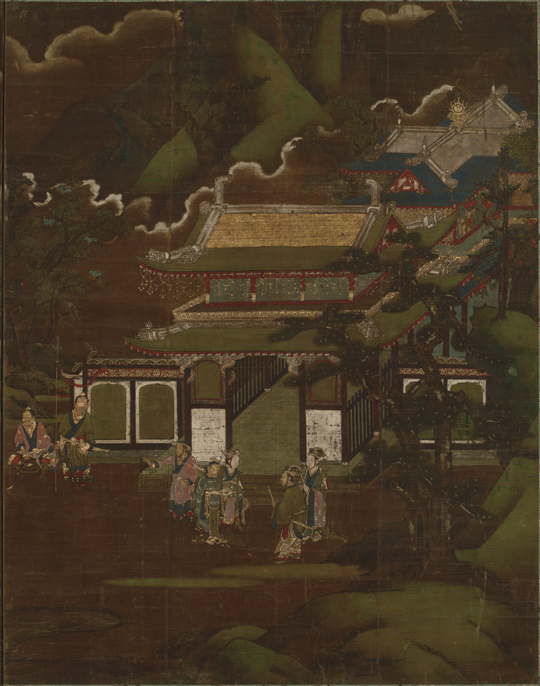
Researchers believe these works were created around that time as well, making them rare examples of painted partitions dating to the 14th century. During the Edo period (1603–1868), the paintings were removed from their original partitions and remounted on folding screens, but some of the panels appear to have been cut smaller than their original dimensions and remounted in the wrong order. The three screens to the viewer’s left are titled [King Wen and Lü Shang]. Lü Shang (also known as Jiang Ziya or Taigong Wang) was a military strategist who spent his later years fishing as a recluse.
During that time, he was recruited by King Wen, one of the founders of the Zhou dynasty (11th c.–249 BC), and helped his son, King Wu, overthrow the Shang dynasty (16th–11th c. BC). The three screens on the right depict [The Four Elders of Mount Shang]. The elders are hermit-sages with white eyebrows and beards who retreated to Mount Shang to escape the ravages of war during the Qin dynasty (221–206 BC). From left to right, the paintings depict an episode in which the four elders met the founder of the Han dynasty (206 BC–220 AD) and became involved in affairs of state.
— Museum description: Tokyo National Museum (CC BY 4.0), via ColBase / Japan Search.