National Treasure
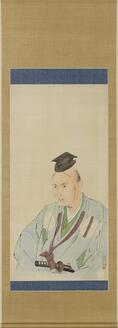
The Scholar Takami Senseki
鷹見泉石像
Paintings · Edo, 1837TNM
Home › Browse › Paintings › Edo period › Grapes
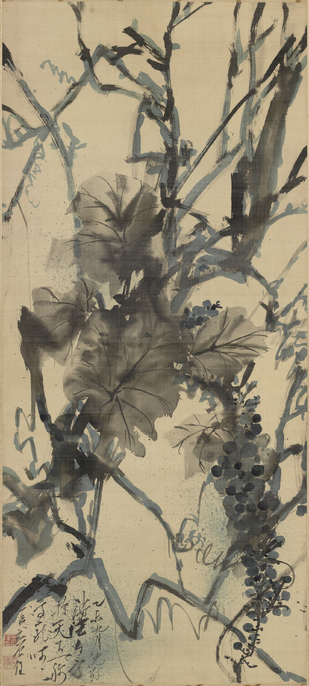
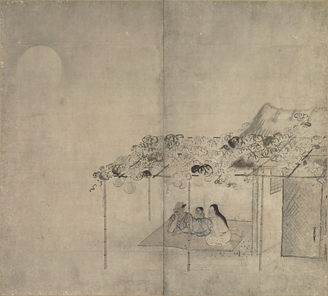
The screen is bursting with powerful depictions of grapes, vines, and large leaves. It may seem monochrome at first glance, but a closer look reveals how the artist has used two colors, black ink and indigo, to engender a sense of three-dimensionality and depth. Smudged black ink has created subtle gradations on leaves lined with veins. The painting exudes a sense of dynamism, from the coarse lines scattered throughout to the spatters of indigo-colored spray. So how did the artist paint this vigorous work? The painter, Tachihara Kyosho, was a samurai who lived in the Mito domain, or present-day Ibaraki prefecture.
The domain's ruler, Tokugawa Nariaki, asked him to paint before diners at a banquet. Prepared for the worst, Kyosho refused, saying he was a warrior, not a professional painter. He is said to have drunk heavily that day, and painted this work before the ruler the following day while still intoxicated. Kyosho was actually capable of producing precise, meticulously-observed paintings, but this fierce work, painted under duress from his feudal lord, seems to be imbued with the spirit of samurai resolve.
— Museum description: Tokyo National Museum (CC BY 4.0), via ColBase / Japan Search.