Treasures of JapanA catalogue of Japan's designated cultural properties 2,690 works catalogued

Home › Browse › Calligraphy & Books › Kamakura period › Fragment of the Nishiyama Edition of Shinkokin Wakashu (New Collection of Japanese Poems of Ancient
National Treasure

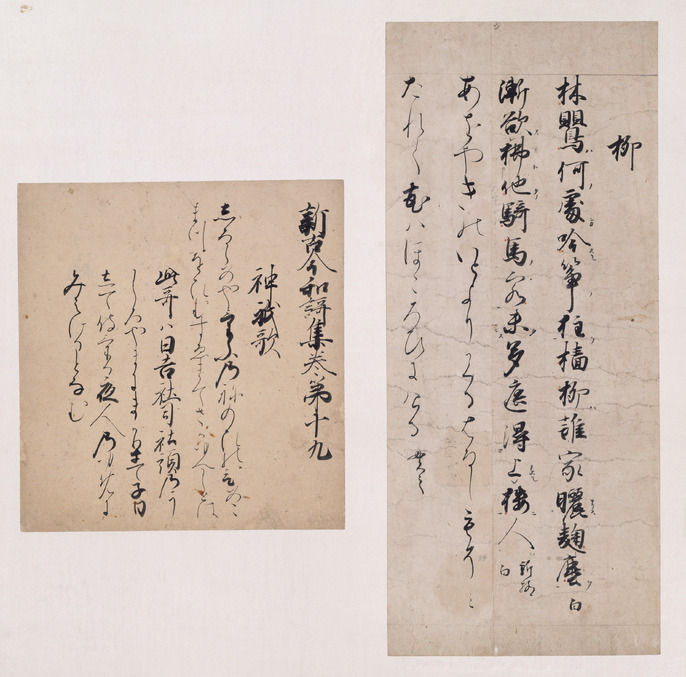
Fragment of the Nishiyama Edition of Shinkokin Wakashu (New Collection of Japanese Poems of Ancient

手鑑「藻塩草」 新古今和歌集巻第十九断簡(西山切)
Fragment of the Nishiyama Edition of Shinkokin Wakashu (New Collection of Japanese Poems of Ancient (手鑑「藻塩草」 新古今和歌集巻第十九断簡(西山切))
PLATE IImage: Kyoto National Museum, via ColBase — CC BY 4.0
At a glance — Calligraphy & Book · Kamakura period · held by Kyoto National Museum · designated National Treasure of Japan.

Fact Sheet

Designation
National Treasure (国宝)
Date
1185
Dimensions
Height16.3mm:Width15.1cm
Catalogue ID
cobas-4065

Find more

Fragment of the Nishiyama Edition of Shinkokin Wakashu (New Collection of Japanese Poems of Ancient is a calligraphy & book of Kamakura period (1185), held by the Kyoto National Museum and designated a National Treasure (国宝) of Japan. The facts below are transcribed from the official catalogue record; this entry carries no museum description in English.

Record & Sources

Cite this page: “Fragment of the Nishiyama Edition of Shinkokin Wakashu (New Collection of Japanese Poems of Ancient(手鑑「藻塩草」 新古今和歌集巻第十九断簡(西山切)).” Treasures of Japan, catalogue no. cobas-4065. Kyoto National Museum. https://treasures.yamato-kenkou.com/treasures/fragment-of-the-nishiyama-edition-of-shinkokin-wakashu-new-collection-of-japanese-poems/ — entry last verified 1 November 2026.
Full record data (as published in the official catalogue record)
  • Cultural property designation: National Treasure
  • Genre: Calligraphy
  • Category: Calligraphy:Category:Calligraphy (kohitsu)|Calligraphy:Region:Japan|Calligraphy:Period:Japan:Kamakura period
  • Size: Height16.3mm:Width15.1cm
  • 種別: 書跡:分類:古筆|書跡:地域:日本|書跡:時代:日本:鎌倉
  • 分類: 書跡
  • 法量: 縦16.3mm:横15.1cm

Also at the Kyoto National Museum More →

More calligraphy & books of the Kamakura period More →

Advertisement