Treasures of JapanA catalogue of Japan's designated cultural properties 2,690 works catalogued

Home › Browse › Calligraphy & Books › Kamakura period › Fragment from the Kamo Edition of Kokin Wakashu (Collection of Ancient and Modern Japanese Poems), V
National Treasure

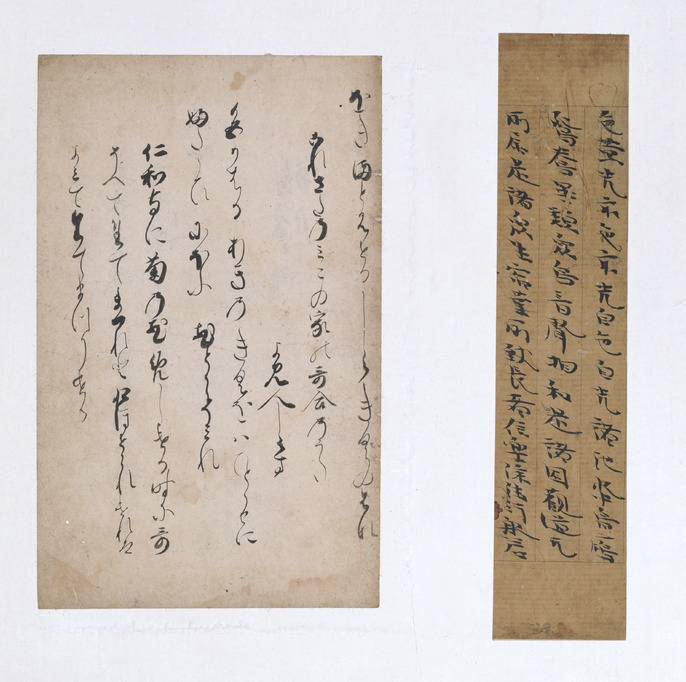
Fragment from the Kamo Edition of Kokin Wakashu (Collection of Ancient and Modern Japanese Poems), V

手鑑「藻塩草」 古今和歌集巻第五断簡(賀茂切)
Fragment from the Kamo Edition of Kokin Wakashu (Collection of Ancient and Modern Japanese Poems), V (手鑑「藻塩草」 古今和歌集巻第五断簡(賀茂切))
PLATE IImage: Kyoto National Museum, via ColBase — CC BY 4.0
At a glance — Calligraphy & Book · Kamakura period · held by Kyoto National Museum · designated National Treasure of Japan.

Fact Sheet

Designation
National Treasure (国宝)
Date
1185
Dimensions
Height23.6cm:Width14.5cm
Catalogue ID
cobas-3962

Find more

Fragment from the Kamo Edition of Kokin Wakashu (Collection of Ancient and Modern Japanese Poems), V is a calligraphy & book of Kamakura period (1185), held by the Kyoto National Museum and designated a National Treasure (国宝) of Japan. The facts below are transcribed from the official catalogue record; this entry carries no museum description in English.

Record & Sources

Cite this page: “Fragment from the Kamo Edition of Kokin Wakashu (Collection of Ancient and Modern Japanese Poems), V(手鑑「藻塩草」 古今和歌集巻第五断簡(賀茂切)).” Treasures of Japan, catalogue no. cobas-3962. Kyoto National Museum. https://treasures.yamato-kenkou.com/treasures/fragment-from-the-kamo-edition-of-kokin-wakashu-collection-of-ancient-and-modern-japanese/ — entry last verified 1 November 2026.
Full record data (as published in the official catalogue record)
  • Cultural property designation: National Treasure
  • Genre: Calligraphy
  • Category: Calligraphy:Category:Calligraphy (kohitsu)|Calligraphy:Region:Japan|Calligraphy:Period:Japan:Kamakura period
  • Size: Height23.6cm:Width14.5cm
  • 種別: 書跡:分類:古筆|書跡:地域:日本|書跡:時代:日本:鎌倉
  • 分類: 書跡
  • 法量: 縦23.6cm:横14.5cm

Also at the Kyoto National Museum More →

More calligraphy & books of the Kamakura period More →

Advertisement