National Treasure

Gigaku Mask: Baramon
伎楽面 波羅門
Art Objects · Asuka, 7th centuryTNM
Home › Browse › Art Objects › Asuka period › Four Fragments of a Sash
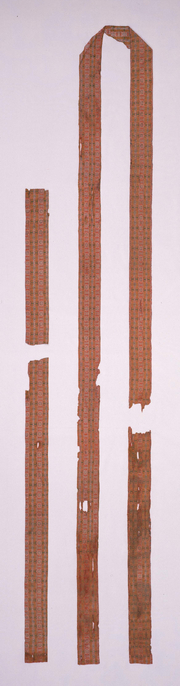
To make this warp-faced, compound-weave textile, vertical threads (warp) in sets of differing colors are arranged on a loom. The weaver then passes the horizontal thread (weft) under specific vertical threads to bring the desired color to the surface of the cloth and make a design. This is an early patterning technique that was later superseded by weft-faced compound weaves from the 8th century onwards. The patterns on weft-faced compound weaves are made from different colors of horizontal thread (weft). Warp-faced, compound-weave textiles with red grounds that were passed down at Hōryūji Temple are called [shokkōkin] (“Shu river brocade”) in reference to fine silk fabrics historically produced in the ancient Chinese state of Shu (near present-day Chengdu, Sichuan Province).
In this example, lotus flowers encircled in beaded roundels are framed in checks. Multiple textiles with this pattern are contained in the collection, but this example is particularly well made, despite its small size. This sash allegedly belonged to Lady Kashiwade, one of Prince Shōtoku’s consorts.
— Museum description: Tokyo National Museum (CC BY 4.0), via ColBase / Japan Search.


