National Treasure
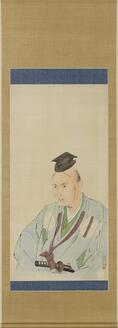
The Scholar Takami Senseki
鷹見泉石像
Paintings · Edo, 1837TNM
Home › Browse › Paintings › Meiji and later period › Eight Views of Omi Province
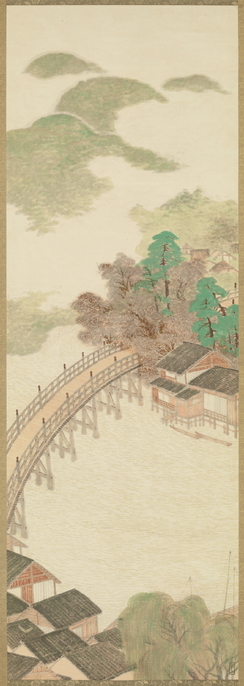
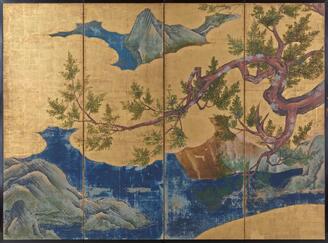
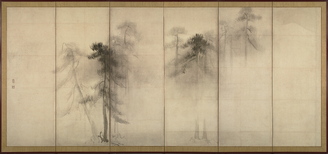
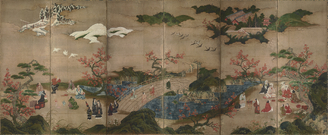
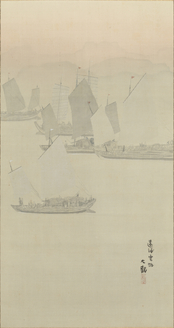
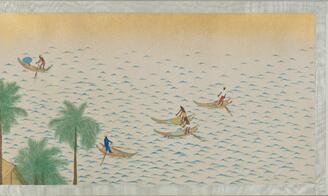
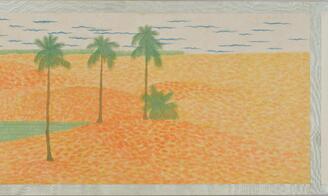
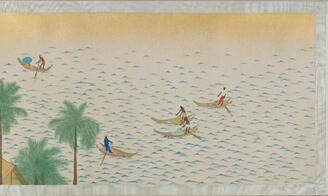
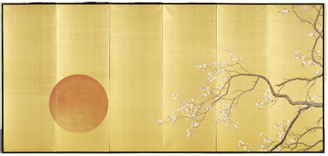
These paintings represent eight renowned scenic spots on the shores of Lake Biwa in Omi province (now Shiga prefecture). They were created based on the artist’s impressions and sketches from when he visited the region in summer. The Eight Views of Ōmi is a selection of eight remarkable landscapes from the shores of Japan’s largest lake, Lake Biwa, in what was once known as Ōmi Province, and is now Shiga Prefecture. Eight Views of Xiaoxiang, a work depicting eight landscapes from the Xiaoxiang region in Hunan Province, China, gained popularity in Japan, and inspired collections of paintings or poems on themes such as The Eight Views of Ōmi or The Eight Views of Kanazawa. The eight views in these paintings are said to have been selected in the 17th century, during the Edo period (1603–1868). This set of eight paintings celebrate the eight views of Ōmi Province, which have been a painting subject since the Edo period, and display a distinctive sensibility, unconstrained by conventional depictions of the same theme, while still adhering to the forms, materials, and techniques of traditional Japanese painting.
Although depictions of the Eight Views of Ōmi typically show the four seasons, these paintings mainly depict summer scenes. The artist painted them based on his impressions and sketches from his travels and walks around Lake Biwa in the summer of 1912, from his own personal perspective. Although paintings on the theme of “Eight Views” originally distinguished between different seasons and time, these paintings depict each landscape in a distinct way. Due to variations in perspective, the use of blank space, color tones and brushwork, each work gives off an intense individuality. The artist, Imamura Shikō was a Japanese painter born in 1880 in Kanagawa Prefecture, and passed away in 1916. He worked with a powerful consciousness of overcoming the traditions of Japanese painting and breaking new ground. His innovative style is said to have caused shock in painting circles in his day, and to have exerted a strong influence on later painters. That attitude toward painting is vividly expressed in this set of paintings.
— Museum description: Tokyo National Museum (CC BY 4.0), via ColBase / Japan Search.