National Treasure

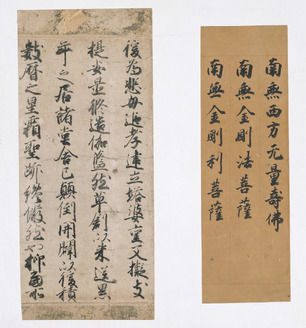
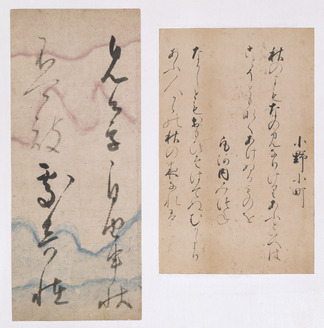
Commentary on Vajracchedikā-sūtra, by priest Kūkai
空海筆 金剛般若経開題残巻(三十八行)
Calligraphy & Books · Heian, 9th centuryNara NM
Home › Browse › Calligraphy & Books › Nanbokuchō period › Buddhist Teachings (Hōgo) Written By Priest Seisetsu Shōchō
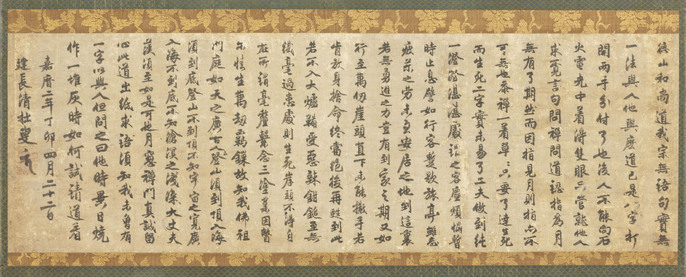
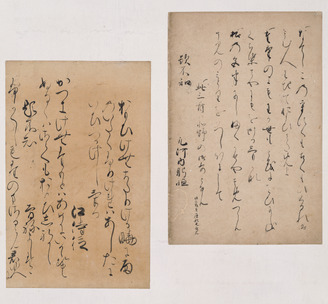
From 1326 and on, the Chinese-born priest Qingzhuo Zhengcheng (J. Seisetsu Shōchō; 1274–1339) resided at Zen temples in Kamakura and Kyoto. This transcribes a Dharma talk he gave while at Kenchōji Temple, a large and influential institution in Kamakura. Such sermons conveyed by Chan and Zen masters shed light on the true teachings of Buddhism. Here, he expounds on the importance of rigorous Buddhist practice. {br=>[[], []], content=>[Priest Seisetsu Shōchō (Qingzhuo Zhengcheng, 1274-1339) was a Zen priest during the Yuan dynasty in China. He was the successor of Priest Gugoku Chikei and is known as the younger brother of Priest Gekkō Shōin. Seisetsu Shōchō came to Japan in 1326, when he was fifty-three years old, and was staying in Kenchō-ji temple with the support by Regent Hōjō Takatoki. Later on, Shōchō was staying in Kennin-ji and Nanzen-ji temples. He edited a book on precepts of Zen Buddhism, the Daikan Seiki, which suited the Japanese way of living, and contributed to the development of Japanese Zen Buddhism., The Buddhist sermon, which Seisetsu Shōchō delivered to Zen monks of the Gessō circle while he was in Kennin-ji temple, is written in the scroll introduced in this article. Special notes are also included in this scroll. The written seals of Prince Sondō, who was the cloistered prince Son'en's younger brother-in-law, are found on the reverse side of the paper joint., According to the inscription at the beginning of the scroll by Prince Sonjun, this scroll was written by the cloistered prince Son'en himself. It is a significant calligraphic piece edited and written by Son'en, who is well known not only as a Buddhist priest but also as a master calligrapher.]} {i=>[Daikan’s Rules of Purity, kaō], br=>[[], []], content=>[Qingzhuo Zhengcheng (J.
Seisetsu Shōchō; posthumous title Daikan Zenji; 1274–1339) was a Chan (J. Zen) master that came to Japan during China’s Yuan dynasty (1271–1368). He contributed to the development of the Zen school in Japan by compiling works like , (J. Daikan shingi) that outlined rules for Zen temples in ways that suited Japanese cultural practices. He was the dharma heir of Yuji Zhihui (dates unknown) and the younger brother of Yuejiang Zhengyin (b. 1267). Qingzhuo was invited to Japan at the age of 53 in Karyaku 1 (Taiding 3/1326) by the shogunal regent Hōjō Takatoki (1303–1333) and became the 22nd abbot of Kenchōji Temple in Kamakura. He later became abbot of Engakuji Temple and Nanzenji Temple. In Genkō 3 (1333), he succeeded the 23rd abbot of Kenninji Temple in Kyoto by the imperial order of Emperor Go-Daigo (1288–1339; r. 1318–1339). , Qingzhuo wrote this text on the 22nd day of the 4th month of Karyaku 2 (May 14, 1327 [Julian calendar]) while residing at Kenchōjii Temple. It is a sermon for a priest named Gessō (dates unknown) on the key to enlightenment and quotes the Tang priest Deshan Xuanjian (780–865). The entire text is comprised of 27 lines and includes the year, his signature, his stylized monogram (, ), and seal. The work is a well-known example of Qingzhuo’s calligraphy., Gessō’s identity is not known, but he is thought to have been an important figure in the Kamakura shogunate.]}
— Museum description: Nara National Museum (CC BY 4.0), via ColBase / Japan Search.